
Every organization faces significant challenges when undertaking SAP projects. Business operations, efficiency, and competitiveness are greatly affected by the success of these projects. In order to ensure a smooth implementation, SAP projects use methodologies that provide structured frameworks for planning, executing, and managing different phases of the project lifecycle. The purpose of this blog is to explore and compare two prominent SAP methodologies: ASAP (Accelerated SAP) and SAP Activate.
The ASAP Methodology: An Overview
In the SAP community, the Accelerated SAP (ASAP) Methodology has been a staple for many years. An SAP project is guided by a comprehensive framework that guides the team through various project phases. There are five phases to this methodology, which includes a well-defined structure
1
Project Preparation
2
Business Blueprint
3
Realization
4
Final Preparation
5
Go-Live & Support
SAP Activate Methodology: A Brief Overview
The SAP Activate methodology was introduced by SAP to align with today’s fast-paced, agile business environment. When compared with ASAP, SAP Activate emphasizes flexibility and agility while maintaining structure. It is based on three main pillars:
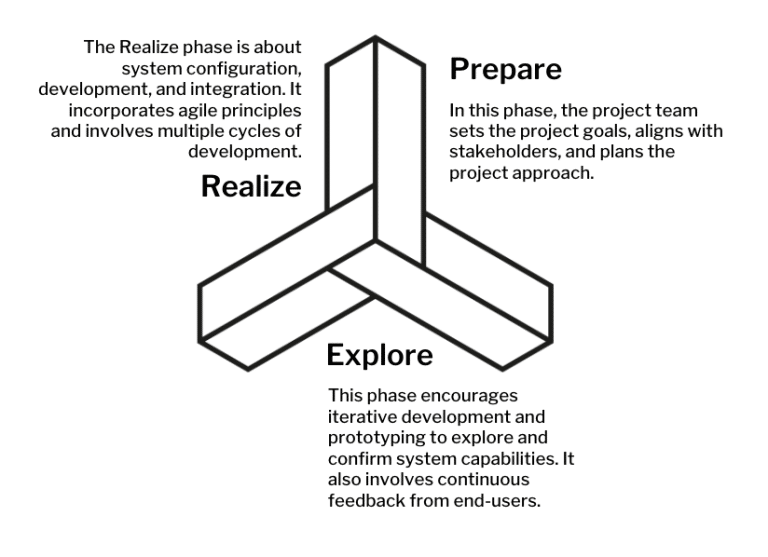
SAP Activate Methodology provides a flexible and agile approach to SAP implementation projects. From planning to deployment, it guides project teams throughout the entire lifecycle. SAP Activate Methodology consists of the following phases:
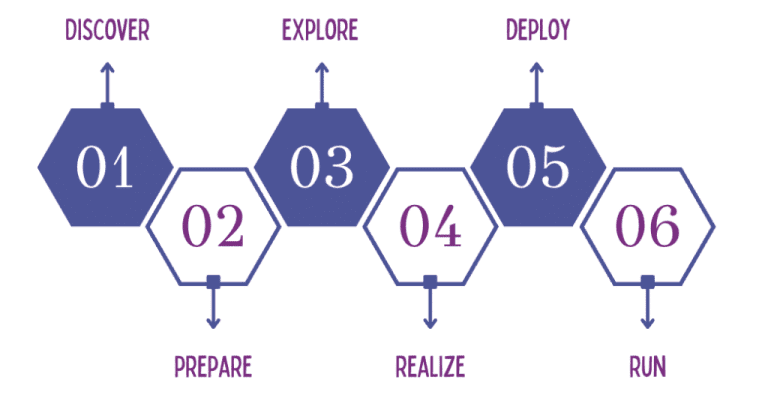
The activities in each of the phase are outlined below:
Phase
Activities
Discover
- During this phase, the project team identifies the project scope, goals, and objectives.
- Stakeholders are engaged to define high-level business processes and requirements.
- A project charter is created, outlining the project's purpose, scope, and initial timeline.
Prepare
- In this phase, the project team refines the project scope and creates a detailed project plan.
- Business and technical teams collaborate to define detailed requirements and plan the necessary resources.
- The project team also prepares the system landscape, configures foundational settings, and sets up project infrastructure.
Explore
- The Explore phase focuses on iterative solution design and prototyping.
- Rapid iterations and prototypes are used to showcase system capabilities and gather user feedback.
- Detailed requirements are finalized, and gaps between standard SAP functionality and specific business needs are addressed.
Realize
- This phase involves the actual system development, configuration, and integration work.
- Iterative cycles continue, resulting in incremental builds of the solution.
- Comprehensive testing takes place to ensure the solution meets the defined requirements.
Deploy
- This phase involves the actual system development, configuration, and integration work.
- Iterative cycles continue, resulting in incremental builds of the solution.
- Comprehensive testing takes place to ensure the solution meets the defined requirements.
Run
- After the solution is deployed to the production environment, the Run phase focuses on ongoing operations and support.
- Monitoring, issue resolution, and continuous improvement activities take place during this phase.
- The solution is maintained and optimized based on user feedback and changing business needs.
Through their iterative nature and close collaboration with stakeholders, these phases enable flexibility and adaptability throughout the project lifecycle. SAP Activate encourages project teams to select the appropriate methodology components based on the project’s goals and characteristics.
Effectively Using SAP SOD Analysis to Meet Audit Needs
Comparison: ASAP vs. SAP Activate
ASAP
SAP Activate
Approach
Flexibility
Timeline
User Involvement
Documentation
Choosing the right methodology for an SAP project depends on various factors, including the project’s scope, timeline, complexity, organizational culture, and the preferences of the project team. The decision should be based on your organization’s specific needs and circumstances as both ASAP Methodology and SAP Activate Methodology have strengths and weaknesses. To assist you in making an informed decision, consider the following:
ASAP Methodology
SAP Activate Methodology
Strengths
- Well-structured and comprehensive: ASAP provides a clear roadmap and defined phases, which can be reassuring for projects with stable and well-defined requirements.
- Extensive documentation: This methodology emphasizes documentation, which can be valuable for compliance and knowledge retention.
- Agile and adaptable: Activate's iterative approach allows for flexibility in addressing evolving requirements and changes.
- Faster time-to-value: The iterative cycles in Activate can lead to quicker delivery of usable functionality.
- Continuous user involvement: Activate encourages frequent feedback and engagement from end-users, leading to a solution that better meets their needs.
When to Consider
- If your project has a relatively stable scope and requirements.
- If your organization values thorough documentation and a structured approach.
- If you have experience with and confidence in following sequential methodologies.
- If your project has a dynamic scope or changing requirements.
- If your organization values agility and collaboration.
- If you are open to an iterative approach and can manage the complexities that may arise.
FAQ's
1. What is the main difference between ASAP and SAP Activate methodology?
ASAP follows a structured, step-by-step approach with fixed phases, while SAP Activate uses an agile and iterative approach. Activate allows faster changes and continuous feedback during the project.
2. When should an organization choose the ASAP methodology?
ASAP is suitable when project requirements are stable and clearly defined. It works well for organizations that prefer detailed documentation and a traditional, structured implementation process.
3. Why is SAP Activate better for modern SAP projects?
SAP Activate supports flexibility, faster delivery, and continuous user involvement. It is ideal for projects where requirements evolve and quick business value is important.