
Most organizations meet SAP GRC as an compliance solution before an audit. The ones that get value from it treat governance, risk, and compliance (GRC) as something the SAP landscape runs on every day.
SAP GRC is the practice of running governance, risk, and compliance as one connected system inside the SAP landscape, rather than as three disconnected exercises that surface once a year. In technical terms, SAP GRC is a family of SAP applications that control who can do what, monitor whether business controls are actually working, quantify exposure, and produce audit evidence on demand.
Most teams meet it in a narrower form. A looming SOX audit, a failed Access Review, or an S/4HANA migration forces the question of who has access to what, and SAP GRC arrives as an access-control project. That version keeps auditors quiet for a cycle. The version that pays for itself over years is the one where governance, risk, and compliance stop being a scramble and become part of how the SAP landscape operates.
This guide covers what sits inside the platform, how a real SAP GRC Implementation unfolds, where SAP GRC Consulting earns its fee, and why so many organizations move to SAP GRC Managed Services once the dust settles. Good SAP GRC Services are not switched on and left alone. They are designed to a business and kept alive.
What SAP GRC Solutions actually include?
The SAP GRC Solutions portfolio is broader than the Access Control module most teams start with. The core components:
- SAP Access Control – Risk analysis and Segregation of Duties (SoD), Access request workflows, Business role management, and Emergency access (firefighter). This is where most GRC programs begin and where early value is realized.
- SAP Process Control – Continuous control monitoring (CCM) of business and IT controls etc., Process Control is the next product that enterprises implement so failures are caught by the system rather than by an auditor during audits alone.
- SAP Risk Management – A structured register of enterprise risks, their likelihood, impact, and mitigating controls, tied back to the processes that own them. The RCMs can be well managed using SAP RM.
- SAP Audit Management – A planning, fieldwork, and documentation for internal audit, working from the same control data as the rest of the suite. The Audit Universe module will help enterprises to configure a one audit place.
- SAP Identity Access Governance (IAG) and Cloud Identity Services – The answer for new cloud and hybrid solutions, extending SoD analysis and access requests beyond on-premise ERP into cloud applications.
Within Access Control, the detail matters. Access Risk Analysis is only as good as the ruleset behind it, and a ruleset left in its default state will flag noise while missing the real conflicts specific to how an organization has built its roles. Emergency access logs are worthless if no one reviews them. The SAP GRC Solutions that deliver are configured to a business, not enabled and forgotten.
Beyond the core: security and data protection
SAP GRC is now beyond classic modules and new modules were introduced into security and data protection. Three capabilities matter most for organizations tightening control over sensitive data:
- SAP Enterprise Threat Detection (ETD) – Real-time monitoring of SAP log data to surface anomalies, suspicious user behaviour, and active threats across the landscape, available as a cloud edition managed service. In effect, SIEM tuned for SAP.
- SAP Risk and Assurance Management (RAM) – Enterprise risk identification, assessment, and mitigation planning, bringing risk and assurance together so exposure connects back to the controls and audits that manage it.
- SAP UI Data Protection Masking and Logging – Field-level masking with attribute-based access control, so unauthorized users see protected data as masked, paired with logging of who accessed critical data across SAP UIs. Central to GDPR, DPDP, and similar data-protection obligations.
For organizations standardizing on SAP, these sit alongside Access Control and Process Control as one governance and security fabric rather than a drawer of disconnected tools.
Why SAP GRC matters
Passing an audit and being in control are not the same thing. A well-run SAP GRC program closes that gap rather than papering over it.
Have you done your SAP GRC Implementation properly?
Out of our experience, many SAP GRC projects stop at installation and configuration of the application. SAP GRC implementation is less about installing software and more about agreeing how an organization wants to govern itself, then encoding those decisions into the system.
A typical SAP GRC Implementation moves through a recognizable sequence: Business Understanding, Detailed scoping and design, technical installation and configuration, Ruleset customization, Integration with SAP and Non-SAP systems, Testing, and Cutover.
Timelines depend on scope and the state of the existing role design. A focused Access Control rollout can land in a few weeks. A broader program spanning Access Control, Process Control, and Risk Management across a complex, multi-system landscape runs several months. The variable that most often slows an SAP GRC Implementation is not GRC itself, but the underlying roles. When authorizations are messy, the SoD ruleset lights up like a switchboard, and the project quietly turns into a role redesign before it can turn into a governance win.
The organizations that get the most from SAP GRC Implementation plan for role cleanup instead of being surprised by it. They also decide, up front, who owns each risk and each mitigating control, because a workflow with no clear owner stalls the first time someone tries to use it.
Where SAP GRC Consulting earns its fee
SAP GRC Consulting is where product capability meets business reality. An experienced SAP GRC consulting company does the work that generic implementation partners tend to skip: tuning the SoD ruleset to an organization’s actual risk appetite, redesigning roles so the conflict count is defensible, remediating what remains, and designing an ownership model that survives contact with real users.
Installed is not implemented
A typical System Integrator hands over a running system. A boutique partner turns it into control the business can stand behind. The distance between those two outcomes is where SAP GRC Consulting earns its fee.
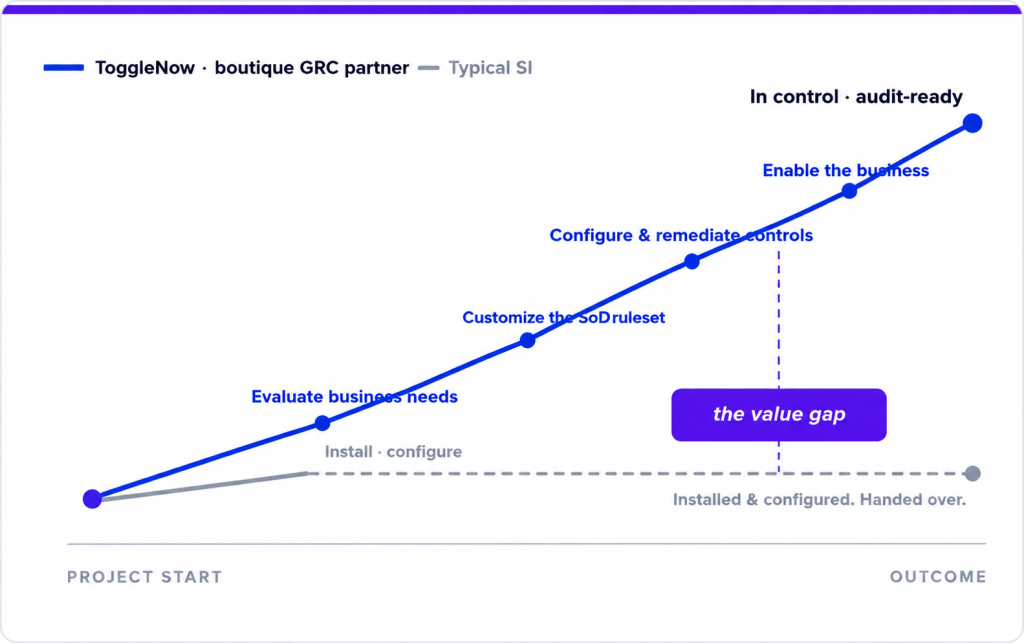
Figure 1.0 – Installing SAP GRC is the easy part. Making it protect the business is the difference.
Good SAP GRC Consulting Services start with a business process assessment, not a software checklist. They map how access should work for finance, procurement, and IT, then build the controls to match. Beyond the initial build, SAP GRC Consulting Services cover role redesign, SoD remediation, compliance strategy, audit preparation, and the advisory work that keeps a program aligned as the business changes.
Choosing an SAP GRC Company for this work is a decision about depth. Certified consultants, real implementation history, and a working command of SAP Security fundamentals separate a partner that reduces risk from one that simply resells licenses. The right SAP GRC consulting company shortens delivery, avoids expensive rework, and gets more out of the SAP investment already made.
SAP GRC Support and Managed Services
SAP GRC goes live. Governance is never finished. That gap is why SAP GRC Support and SAP GRC Managed Services exist.
SAP GRC Support covers the ongoing operational load: monitoring the system, resolving issues, maintaining roles, updating the ruleset as regulations and org structures shift, applying security patches, and handling upgrades. Left unmanaged, a GRC platform decays quietly. The ruleset ages, exceptions pile up, firefighter logs go unread, and the system meant to demonstrate control starts to undermine it.
SAP GRC Managed Services solve the sustainability problem structurally. Instead of depending on one or two internal specialists, an organization gets continuous monitoring, administration, optimization, and support from a team that does this work daily. SAP GRC Managed Services provide access to experienced consultants, faster resolution, proactive monitoring, and predictable cost, without carrying a large in-house function for a system that needs deep expertise only in bursts. For most organizations, SAP GRC Managed Services are the difference between a platform that stays audit-ready and one that slides back into the state it was bought to fix.
What this looks like in practice
The value of SAP GRC shows up in operational numbers, not slideware. A leading Indian FMCG company running SAP GRC Access Control 12.0 across a wide distribution network came to ToggleNow with manual access workflows, unreviewed firefighter activity, and recurring audit friction. The work drew on much of what this guide describes: a custom SAP UI5 access request form with self-service, automated firefighter log reviews driven by rule engines, more than fifty process-specific automations spanning ruleset redesign and user lifecycle, and native integration with HR platforms so provisioning and deprovisioning stayed in step with joiners and leavers.
CASE STUDY – FMCG – SAP GRC ACCESS CONTROL 12.0
Automating access control across a national distribution network

Stronger security posture, tighter audit alignment, and a simpler day-to-day experience for the business, delivered within months and without disrupting the running landscape.
Read the full case study
SAP GRC on S/4HANA and the move to the cloud
The migration to SAP S/4HANA has become the single biggest catalyst for GRC modernization. SAP GRC integrates with SAP S/4HANA to deliver centralized access control, risk management, and compliance monitoring across the new environment, and the migration itself is the natural moment to rebuild roles and reset the control model rather than carry old problems forward.
As landscapes turn hybrid, governance follows. SAP Identity Access Governance (IAG) and Cloud Identity Services extend SoD analysis and access requests across on-premise and cloud applications, so a single view of access risk holds even as workloads spread. Organizations planning around the end of SAP Business Suite 7 mainstream maintenance increasingly treat GRC modernization as part of the migration, not a task for afterward.
Source: SAP maintenance roadmap – mainstream maintenance for SAP Business Suite 7 through the end of 2027.
One architectural decision surfaces on almost every S/4HANA program: whether to keep SAP GRC Access Control running as a standalone system or consolidate it into an embedded deployment on the S/4HANA box. Standalone made sense when GRC governed many disparate systems. As landscapes consolidate on S/4HANA, an embedded model removes a system from the estate, simplifies connectors, and closes a separate upgrade track. The migration itself is the hard part, because years of access requests, rulesets, mitigating controls, and workflow history cannot simply be copied across.
Migr8GRC is ToggleNow’s purpose-built accelerator for exactly that move. It applies a three-level method: delete data that is no longer needed, archive the records that must be retained for audit and history, and transfer the configuration and live data the embedded system depends on. Built on SAP ABAP and Fiori and shipped as a transport or add-on inside the SAP landscape, it turns a standalone-to-embedded migration from a manual reconstruction into a controlled, repeatable process.
MIGRATE. MODERNIZE. EMPOWER.
GRC AC - Migration from Standalone to Embedded
A three-level methodology: Delete data no longer needed, Archive key data for later, and Transfer the configuration and data that matter into the embedded system.
Stack: SAP ABAP / Fiori - Deployed as a TR / add-on in the SAP landscape
SAP GRC for HANA 1.0 (SAP GRC 2026): a guide to next-gen GRC
SAP GRC 2026, delivered as SAP GRC for SAP HANA (formally SAP GRC for SAP S/4HANA Cloud Private Edition), is SAP’s next-generation, unified platform for Governance, Risk, and Compliance. It consolidates Access Control, Process Control, Risk Management, and Assurance and Compliance into a single product running natively on SAP HANA, with one common UI, AI, and technology stack rather than four separately deployed modules.
Three shifts define next-gen GRC:
- HANA-native architecture – Real-time analytics, faster risk and SoD rule checking, lower latency, and a foundation built for AI-driven use cases.
- Consistent SAP Fiori experience – Every module follows Fiori design standards, so access requests, approvals, and compliance tasks share one modern, intuitive interface across devices.
- AI-driven automation – AI-assisted user access reviews that recommend actions from usage patterns, conversational access requests through SAP Joule, anomaly detection, and AI-generated audit report summaries.
The upgrade path is deliberately gentle for customers already on the S/4HANA line. Organizations running GRC for S/4HANA, on-premise or Private Cloud Edition, upgrade within their existing contracts, with no new SKU or contract change. Customers on GRC 12.0 on any database convert to the S/4HANA-based deployment first, and conversion credits may apply. The platform runs on SAP HANA only and aligns to the SAP S/4HANA 2025 foundation, so GRC investments inherit SAP’s long S/4HANA maintenance horizon, which SAP has committed through 2040.
SAP’s roadmap points to early-adopter availability in early 2026, with general availability rolling out across the year. As with any roadmap, exact dates and scope remain SAP’s to change, so the safe planning assumption is a phased 2026 rollout rather than a single launch date.
The practical takeaway is that the work worth doing today, standalone-to-embedded consolidation and role cleanup, is the same work that makes the move to SAP GRC 2026 painless later. Landscapes that are clean, embedded, and current on S/4HANA transition to the HANA-native platform with far less friction than those carrying legacy debt.
Source: SAP Security, Governance, Risk and Compliance update, SAP user groups
SAP GRC for SAP HANA overview (PDF). Roadmap items are forward-looking and subject to change.
Choosing an SAP GRC Company, from the USA to Global Delivery
The market is full of firms that will implement the software. Fewer will own the outcome. A capable SAP GRC Company whether in the USA or other country brings certified consultants, expertise, industry context, strong references, managed-service capability, and a working command of SAP Security and compliance practice.
Strong SAP GRC Services span the full lifecycle: implementation, consulting, managed services, upgrades, compliance assessments, and audit support. Delivery matters as much as scope, close to the business and in the time zones internal teams actually work in, whether that is a single US landscape or operations across several regions. The point that separates partners is continuity: carrying a program from design through steady-state operation, rather than handing over the keys at go-live and disappearing.
The right SAP GRC Company is the one still adding value in year three, when the audit is routine and the controls simply work.
Closing Perspective
SAP GRC works when it stops being a compliance chore and becomes part of how the SAP landscape is governed. The platform supplies the mechanism. The value comes from configuring it to a real business, sustaining it with disciplined SAP GRC Support, and treating governance, risk, and compliance as continuous rather than annual. Organizations that make that shift stop preparing for audits and start passing them by default.
Read more: What Are SAP Security Services? A Complete Guide for Enterprises
SAP GRC Automation – Role Derivation Validation Tool with Existing Org Data