
Finance depends on it. Procurement depends on it. Manufacturing depends on it. Yet despite its importance, SAP Security often becomes a priority only after an audit finding, a fraud incident, or a major transformation such as SAP S/4HANA.
For many years, SAP Security was treated as an extension of SAP BASIS. The focus was largely on creating users, assigning roles, resetting passwords, and responding to access requests.
Compare today’s SAP landscape with one from a decade ago. Instead of a single SAP ECC system accessed through SAP GUI, organizations now manage SAP S/4HANA, SAP Fiori, SuccessFactors, Ariba, SAP BTP, APIs, mobile users, and AI-powered capabilities such as Joule. Securing that landscape requires a very different approach.
Business users expect seamless access from anywhere, while auditors expect stronger governance than ever before.
This is where experienced SAP Security Services providers make a real difference. They help organizations protect business processes, strengthen governance, reduce fraud risks, and ensure that the right people have the right access at the right time.
At ToggleNow, SAP Security isn’t one of many service offerings. It’s the area we’ve focused on for more than 20+ years. We’ve worked with organizations ranging from mid-sized manufacturers to Fortune 500 enterprises, helping them simplify security, reduce audit findings, and build sustainable governance.
One lesson remains constant: SAP security is not about restricting users – it is about enabling business securely. The right people should have the right access at the right time, while reducing fraud, ensuring compliance, and supporting business growth.
This guide explains what SAP Security Services are, why they matter, what they include, and how enterprises can choose the right partner for long-term success.
One of the biggest misconceptions we often encounter is that SAP Security starts with roles and authorizations. In reality - every successful SAP Security project we've delivered started with understanding the business. Before looking at authorization objects, we usually sit down with process owners. How does purchasing actually work? Who approves invoices? Where are exceptions handled? Those conversations often reveal more than any technical analysis.
Security decisions become much easier when business processes are understood first.
What Are SAP Security Services?
Ask five SAP consultants what SAP Security Services include, and you’ll probably get five different answers. Some focus only on authorizations. Others include SAP GRC or Identity Governance. In our experience, SAP Security Services cover everything required to ensure that the right people have the right access, business risks are controlled, and governance remains sustainable as the organization grows.
We’ve rarely seen organizations struggle because SAP lacked security features. More often, the challenge is years of accumulated complexity. New projects introduce new roles. Acquisitions introduce different naming standards. Temporary access becomes permanent. Over time, governance becomes harder than the technology itself.
Consider a simple example. A finance user can create a vendor, change bank account details, and approve payments. Individually, each authorization may be legitimate. Together, they create an unnecessary fraud risk. Identifying and preventing these situations is one of the core responsibilities of SAP Security Services.
In other words, SAP security is about protecting business outcomes – not just securing applications.
Don't evaluate SAP Security based only on how users are created or roles are assigned. Evaluate how well it supports business governance.
Good SAP Security should reduce business risk without slowing business operations.
Why Enterprises Need SAP Security Services Today
If you’ve been working with SAP for several years, you’ve probably noticed that security requirements have changed just as quickly as the technology itself.
Very few organizations run a standalone SAP ECC system. Most environments include SAP S/4HANA, cloud applications, third-party integrations, APIs, Fiori applications, and external users. Every integration introduces another access path that must be governed.
At the same time, regulations such as SOX, GDPR, NIS2, the Digital Personal Data Protection (DPDP) Act, and industry-specific standards require organizations to demonstrate strong SAP Security Compliance, effective SAP Compliance Management, and robust SAP Risk Management practices.
Waiting until an audit uncovers security gaps is no longer a viable strategy. Enterprises are increasingly investing in proactive SAP Security Services for Enterprises to reduce operational risks, simplify audits, and establish governance that scales with business growth.
What Do SAP Security Services Include?
One question we’re often asked is, “Where do SAP Security Services actually begin?” Many people assume the answer is role design. We don’t.
Before reviewing authorization objects, we first try to understand the business. How are vendors created? Who approves payments? How are purchase orders processed? Which users truly need privileged access? Those conversations shape every security decision that follows.
Experienced consultants first analyze organizational structures, business processes, approval workflows, business requirements and regulatory obligations before recommending technical controls. Security should support the business – not become an obstacle to it.
We rarely begin a customer engagement by talking about roles or authorization objects. The first question we ask is much simpler: “What keeps your auditors awake?”
In one organization, it might be excessive firefighter usage. In another, it could be thousands of unused composite roles created during acquisitions. For a manufacturer preparing for an S/4HANA migration, it is often role complexity that has accumulated over many years.
A typical assessment starts with understanding where the highest business risks exist. Sometimes that’s excessive Firefighter usage. Sometimes it’s dormant users. In other organizations, it’s hundreds of custom roles that nobody owns anymore. Every customer environment is different, which is why assessments should never follow a fixed checklist.
The next step is SAP Role Design or SAP Role Redesign. One of the largest role redesign projects we worked on involved several thousand SAP roles created over many years of acquisitions and regional implementations. The challenge wasn’t SAP. The challenge was inconsistency. Different naming standards, duplicate roles, obsolete authorizations, and years of incremental changes had made the landscape difficult to manage.
Another key component is SAP Authorization Management and SAP Authorization Services. Rather than simply assigning permissions, consultants ensure that authorizations align with business responsibilities. This includes SAP Authorization Review, validation of critical access, and regular optimization as business requirements evolve.
We often see organizations spend months redesigning SAP roles while keeping the same approval process that created the problem in the first place. Technology alone rarely solves access governance issues. Business ownership, clear approval workflows, and periodic reviews are equally important.
From Segregation of Duties to Intelligent Risk Management
For many years, SAP security discussions focused primarily on SAP Segregation of Duties (SoD).
While SoD remains essential, modern security programs go much further.
A traditional SAP SoD Analysis identifies conflicting authorizations – for example, allowing the same individual to create a vendor and process payments. Although important, today’s organizations increasingly adopt a risk-based approach that considers transaction usage, business context, mitigating controls, user behavior, and fraud indicators before determining the true level of risk.
In practice, this means security teams spend less time resolving hundreds of low-risk SoD violations and more time focusing on the conflicts that could genuinely expose the business to fraud or financial loss.
Don't measure the success of your Segregation of Duties initiative by the number of SoD conflicts you remove. Measure it by how well you've reduced business risk. Thousands of low-risk conflicts may require less attention than a handful of high-risk violations involving privileged users.
Every SAP Environment Has Its Own Story
One lesson we’ve learned over the years is that no two SAP security engagements are the same.
Two organizations may run the same SAP solution and even belong to the same industry, yet their security challenges can be completely different. One may be struggling with years of accumulated role complexity after multiple acquisitions. Another may be preparing for an external audit. A third may be migrating to SAP S/4HANA and looking for an opportunity to redesign its authorization model instead of carrying legacy issues into the new environment.
The industry certainly influences security requirements, but so do business processes, organizational structure, regulatory obligations, and the maturity of existing governance practices. That’s why successful SAP Security Services don’t begin with predefined templates. They begin with understanding how the business operates.
Every organization asks for SAP Security. Very few organizations have the same security requirements. A manufacturing company, a utility provider, and a pharmaceutical organization may all use SAP S/4HANA, but their business risks, compliance obligations, and governance priorities are completely different.
Modern SAP Security Is Shaping Digital Transformation
As organizations adopt cloud-first strategies, SAP security is evolving rapidly.
Companies implementing RISE with SAP are using the migration as an opportunity to modernize authorization models instead of simply carrying forward years of technical debt. Security teams are embracing Clean Core principles by simplifying roles, eliminating redundant authorizations, and standardizing governance processes.
Every few months someone asks whether AI will eventually replace SAP Security consultants. We don’t think that’s the right question.
AI is already helping security teams identify unusual access patterns, summarize role changes, and prioritize high-risk findings. What it doesn’t replace is judgment. Deciding whether a particular access combination creates an unacceptable business risk still requires understanding the organization, its processes, and its controls.
Five years ago, continuous SAP Security Monitoring was largely limited to highly regulated industries. Today, it’s becoming part of mainstream SAP governance because organizations no longer want to wait for the next audit to discover security issues.
As a result, many organizations no longer wait for annual audits to identify security gaps. They’re moving toward continuous monitoring because the business expects issues to be detected while they’re still manageable.
Why Specialist Expertise Matters
One mistake we see organizations make is assuming every SAP implementation partner has deep SAP security expertise. In reality, SAP security is a specialist discipline. Designing a business role, performing an SoD analysis, or preparing for an external audit requires a very different skill set than implementing a functional module.
Many firms focus primarily on functional implementations and treat security as a secondary workstream. However, securing an enterprise SAP landscape requires deep expertise in business processes, governance, compliance, fraud prevention, and identity management.
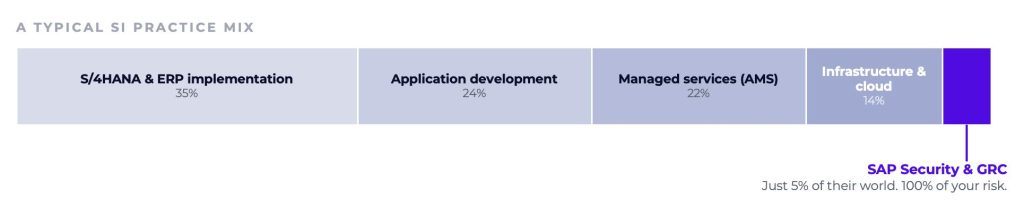
As a boutique SAP Security Consulting Company USA with global delivery capabilities, ToggleNow focuses exclusively on SAP Security, SAP GRC, Cybersecurity, and Identity Governance. Our team has helped organizations across North America, Europe, Asia-Pacific, and the Middle East strengthen governance, modernize authorization models, implement SAP GRC, and simplify complex security landscapes.
Organizations looking for SAP Security Services, or SAP Security Consulting in USA, or a trusted SAP Security Company increasingly prefer specialist partners that combine technical depth with business understanding. In addition to project-based implementations, many enterprises also rely on SAP Security Managed Services, ongoing SAP Security Support, and SAP Security Advisory Services to continuously improve their security posture as business requirements evolve.
If you're planning an SAP S/4HANA transformation, don't treat SAP Security as the final workstream before go-live. Use the project as an opportunity to simplify roles, remove obsolete authorizations, modernize governance, and establish a security model that will support the business for the next decade.
Five Things We Commonly Find During SAP Security Assessments
- Nobody owns the roles anymore.
- Firefighter IDs become permanent IDs.
- Users change departments but keep their old access.
- Role naming standards disappear after acquisitions.
- Thousands of SoD conflicts are accepted without understanding the real business risk.
None of these issues are caused by SAP. They’re usually the result of years of business growth without corresponding governance improvements.
We Don't Recommend Migrating Security As-Is
For the enterprises migrating to S/4HANA Cloud – one approach we don’t recommend is carrying an existing authorization model into SAP S/4HANA simply because “it already works.”
In many organizations, that model reflects ten or fifteen years of incremental changes, acquisitions, emergency fixes, and project-specific decisions.
An SAP S/4HANA migration is one of the few opportunities to simplify security rather than migrate complexity.
Conclusion
We’ve worked on SAP landscapes with fewer than 200 users and others with more than 250,000. The size of the system rarely determines how secure it is.
The organizations that perform best are usually the ones that review access regularly, challenge old assumptions, and treat SAP Security as an ongoing business discipline rather than an implementation task.
That’s ultimately what good SAP Security Services should deliver. Not just secure systems, but greater confidence in the way the business operates.
- SAP Security is much more than user administration.
- Effective security starts with understanding business processes, not authorization objects.
- SAP Security Services include Authorization Management, SAP GRC, Role Design, Identity Governance, SoD Analysis, Security Assessments, and continuous monitoring.
- SAP S/4HANA migrations provide an opportunity to simplify security rather than migrate years of accumulated complexity.
- Long-term success depends on governance, business ownership, and continuous improvement - not one-time implementations.